Secured vs unsecured loans: your questions answered
Is it better to get a secured or unsecured loan?
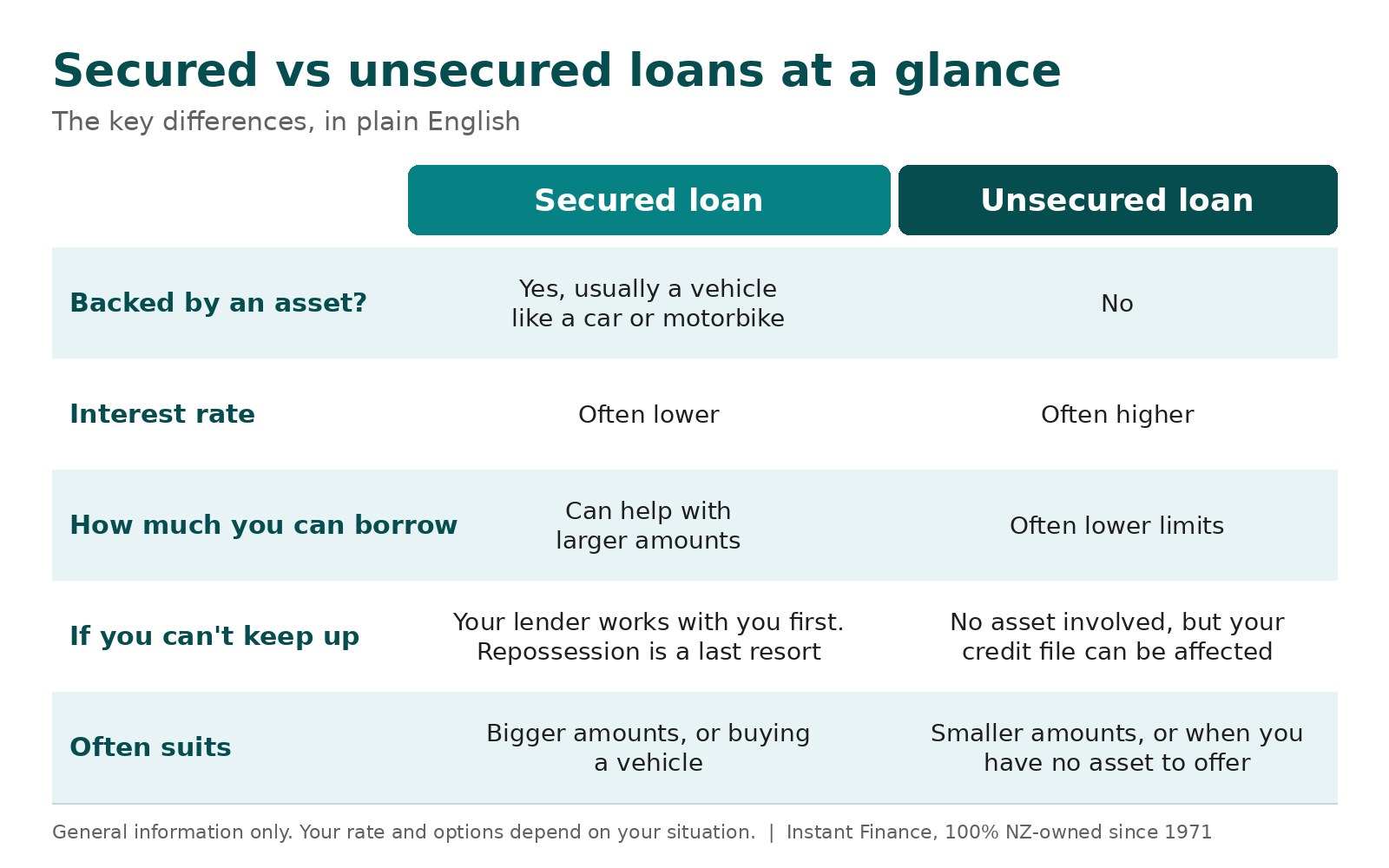
It depends on your situation. A secured loan often has a lower rate and can help with larger amounts, but the asset is part of the deal if repayments can't be sorted out. An unsecured loan doesn't involve an asset, but rates are often higher. For smaller amounts, unsecured is often simpler.
Is a secured loan cheaper than an unsecured loan?
Usually, yes, because security lowers the lender's risk, which often means a lower interest rate. But compare the total you'll repay, including fees and the length of the term, not just the rate.
What are the downsides of a secured loan?
The asset is part of the deal: if repayments genuinely can't be sorted out, repossession is a last resort, after a formal legal process. You'll also need proof you own the asset and insurance on it, a registration fee may apply, and you'll usually need to clear the loan before selling it.
Can I get an unsecured loan with bad credit in NZ?
Possibly. A default or a past credit problem isn't an automatic no with Instant Finance, because we look at your whole situation now. Offering security can sometimes help, but no responsible lender can guarantee approval.
What can be used as security for a loan?
For personal loans, security is usually a vehicle, like a car or motorbike. The lender registers its interest on the Personal Property Securities Register, and you'll need to show you own the vehicle and that it's insured.
Can a lender repossess my car without warning?
No. Repossession is a last resort, and before it can happen a lender must follow a formal legal process. That includes giving you a written warning at least 15 days beforehand and time to catch up. Long before that, a responsible lender will try to work something out with you, so talk to your lender as early as you can.